 EN
 jp
 ko
 fr
 es
 ru
 pt
 ar
 th
 vi
 id


 To Know Dryzone More
Dry cabinets protect electronic components by keeping moisture-sensitive materials in a continuously controlled low-humidity environment before assembly, reflow, packaging, or long-term storage. For semiconductor and SMT manufacturers, this helps prevent absorbed moisture from becoming internal package damage when components are exposed to high soldering temperatures.
The value is not simply "keeping parts dry." Effective humidity control reduces the risk of package cracking, delamination, popcorning, solderability problems, unnecessary baking, and material loss while giving production teams better control over moisture-sensitive device (MSD) floor life.
Plastic-encapsulated semiconductor packages are not completely moisture-proof. Water vapor in the surrounding air can diffuse through moisture-permeable packaging materials while components are stored or waiting beside the production line.
The problem becomes much more serious during reflow. IPC/JEDEC J-STD-033 explains that SMD package bodies can be exposed to temperatures above 200°C during soldering. Rapid moisture expansion combined with differences between package materials can lead to cracking or delamination inside the device.
These defects are particularly difficult for manufacturers because damage is not always visible externally. A component may pass basic inspection but develop weakened internal interfaces that reduce reliability later in service.
This is why humidity management should begin before reflow rather than relying only on inspection after assembly.
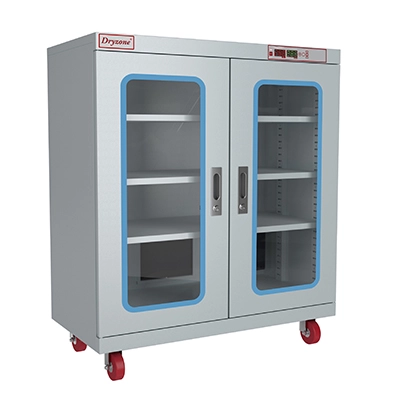
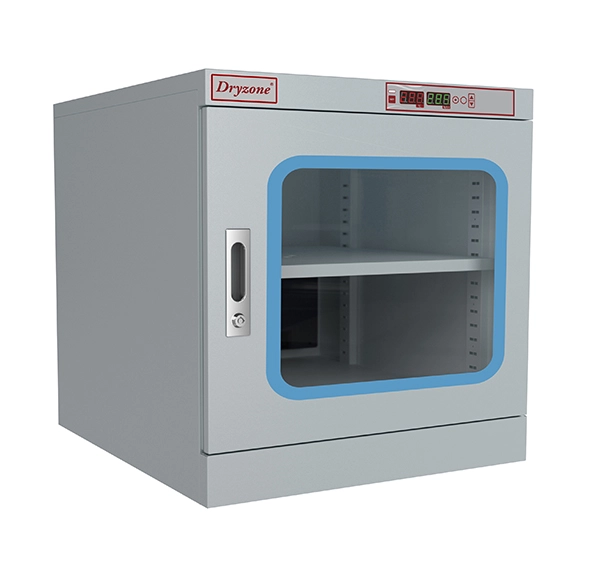
An industrial dry cabinet continuously removes moisture from the enclosed air and maintains a controlled RH level even when components remain stored for long periods.
For SMT production, the cabinet acts as a controlled buffer between dry-packed material and the placement line. Opened reels, BGA packages, QFPs, ICs, PCBs, and other MSDs can be returned to low-humidity storage instead of remaining exposed to factory air.
IPC/JEDEC J-STD-033 provides standardized handling and storage methods specifically to reduce moisture/reflow-related reliability problems.
The most important operational benefits include:
limiting additional moisture absorption after moisture barrier bags are opened;
keeping unused reels protected between production runs;
reducing the probability that components exceed their allowable exposure conditions;
providing a stable environment for components awaiting inspection, programming, assembly, or rework.
Dryzone offers cabinet configurations covering adjustable humidity ranges as well as ≤5% RH and <1% RH storage for different component requirements.

There is no single RH setting suitable for every electronic material.
For moisture-sensitive SMT devices, ≤5% RH is commonly used for dry storage under applicable IPC/JEDEC handling practices. More demanding semiconductor processes may specify <1% RH, while materials that are less moisture-sensitive can be stored at higher controlled humidity.
The correct setting should therefore be determined by the material specification, MSL classification, exposure history, and manufacturing process—not simply by selecting the lowest RH a cabinet can reach.
A useful distinction is:
| Application | Typical Storage Priority |
| Opened SMD reels | Prevent additional moisture absorption |
| BGA, QFP and IC packages | Control MSD exposure before reflow |
| Bare or partially processed PCBs | Reduce moisture uptake before assembly |
| Semiconductor packaging materials | Maintain stable low-humidity storage |
| Sensors and automotive electronic modules | Protect reliability-sensitive components before processing |
For high-value components, stability and recovery performance are often more important than the lowest advertised RH number.
Not in every situation.
A standard dry cabinet is primarily a preventive storage solution. It keeps properly handled components dry and can slow or reduce further moisture absorption. Components that have already exceeded their allowable exposure may require an approved drying procedure before they can safely return to production.
This distinction matters because simply placing a severely moisture-loaded component in a low-humidity cabinet does not necessarily restore it quickly enough for immediate use.
For this reason, manufacturers should separate two process goals:
Dry storage: preventing additional moisture exposure.
Drying or baking: removing absorbed moisture when restoration is required.
Dryzone also provides low-temperature baking cabinets that combine heat with ultra-low humidity for applications requiring active moisture removal rather than storage alone.
Semiconductor production involves materials with high unit value and increasingly tight process windows. Moisture-related handling problems can affect packaged ICs, substrates, bonding surfaces, PCBs, MEMS devices, and other sensitive materials before subsequent processing.
The financial impact is therefore rarely limited to the price of one rejected component. A compromised device can create rework, production interruption, yield loss, additional inspection, or reliability concerns further downstream.
For this environment, dry storage should be treated as part of process control rather than simply warehouse storage.
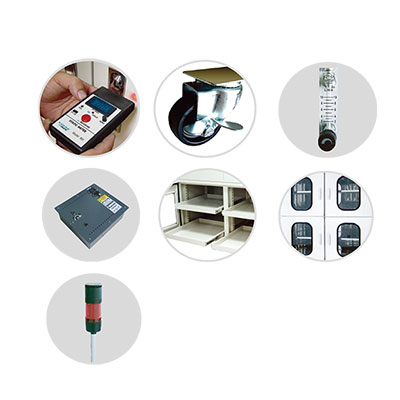
When selecting commercial drying cabinets for semiconductor operations, manufacturers should consider humidity stability, ESD protection, data recording, alarm capability, cleanroom compatibility, compartment design, and recovery after frequent door openings.
Automotive electronics place additional emphasis on long-term reliability because electronic components are eventually exposed to vibration, temperature cycling, electrical loads, and long service periods.
Modern vehicles also contain a growing number of moisture-sensitive electronic assemblies, including power electronics, sensors, control units, communication modules, lighting electronics, and ADAS-related components.
Moisture damage introduced during manufacturing may therefore become a latent reliability issue rather than an immediate production failure.
For automotive suppliers, consistent component storage helps support repeatable SMT processing and reduces one controllable source of variation before reflow. The goal is not only to prevent visible defects but also to protect the integrity of assemblies expected to operate reliably over extended service life.
A cabinet rarely operates with its doors permanently closed.
In a real SMT factory, operators retrieve reels, return unused materials, load new batches, and access stored components throughout the shift. Every door opening introduces higher-humidity factory air into the cabinet.
A cabinet that reaches very low RH under static test conditions but recovers slowly after each opening may provide poor protection in actual production.
When evaluating a drying cabinet for sale, ask suppliers for recovery data under defined test conditions:
What was the ambient temperature and RH?
How long was the door opened?
Was the cabinet empty or loaded?
How long did it take to return below the required RH?
How often can the cabinet be accessed while maintaining process control?
These answers are more useful than comparing minimum RH specifications alone.
For semiconductor and SMT operations, the cabinet should support both environmental control and production discipline.
Stable low humidity
The system should maintain the required RH consistently across normal operating conditions.
Fast recovery after access
Recovery performance becomes increasingly important near high-throughput SMT lines.
ESD protection
Electronic components should not gain moisture protection at the expense of electrostatic-discharge risk. Dryzone's ultra-low-humidity CF1 cabinets, for example, specify ESD-protective surfaces and grounding features for electronics applications.
Monitoring and traceability
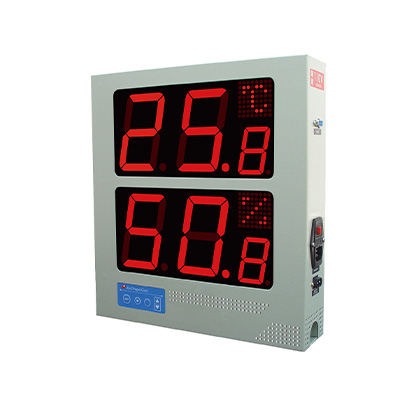
Humidity records, alarms, calibration capability, and network monitoring can help quality teams demonstrate that materials were maintained within required storage conditions.
Practical compartment design
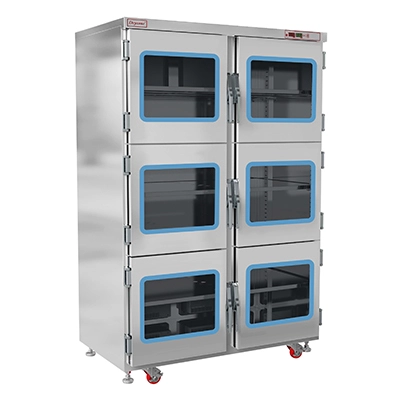
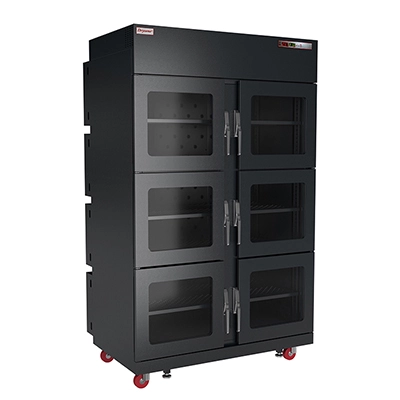
Multiple doors or compartments can reduce the volume of humid factory air entering the cabinet when only one reel or tray needs to be retrieved.
A good cabinet cannot compensate for poor material handling outside the cabinet.
Manufacturers should connect dry storage with MSL identification, moisture barrier bag opening records, floor-life tracking, production scheduling, and return-to-storage procedures.
For example, an opened reel should not remain beside the placement machine simply because it may be required again later in the day. Returning unused material to controlled storage reduces unnecessary ambient exposure and makes MSD handling more predictable.
More advanced factories can also connect cabinet monitoring with reel identification and material tracking. This provides not only a controlled environment but also a record of which material was stored, when it left the cabinet, and how long it remained outside controlled conditions.
Dry cabinets protect electronic components by controlling moisture before it becomes a soldering, packaging, or long-term reliability problem.
For semiconductor and SMT manufacturers, the biggest benefits come from reducing uncontrolled MSD exposure and protecting sensitive packages before reflow. In automotive electronics, controlled storage also supports the higher reliability expectations placed on electronic assemblies throughout their operating life.
The most suitable cabinet should therefore be selected according to the required RH, component sensitivity, access frequency, recovery time, ESD requirements, and traceability needs. A stable cabinet that performs reliably during actual production is more valuable than one chosen only because its specification sheet shows the lowest RH.
Dryzone provides low-humidity, ultra-low-humidity, baking, nitrogen, and customized dry storage solutions for semiconductor, SMT, automotive electronics, and other electronics manufacturing applications.
Common examples include MSDs, ICs, BGAs, SMD reels, sensors, PCBs, and other moisture-sensitive electronic materials.
Many moisture-sensitive devices use ≤5% RH dry storage, although the required condition should follow the component specification and applicable handling standard.
It reduces further moisture absorption, helping lower the risk of moisture expanding inside packages during reflow.
Storage time depends on the component, MSL requirements, prior exposure history, and applicable manufacturing procedure.
No. The correct humidity depends on the material and process requirement. Lower RH should provide a defined manufacturing benefit rather than being selected only as a higher specification.
Compare humidity stability, recovery time, ESD protection, sensor accuracy, alarms, traceability, cabinet layout, capacity, and long-term operating requirements.