 EN
 jp
 ko
 fr
 es
 ru
 pt
 ar
 th
 vi
 id
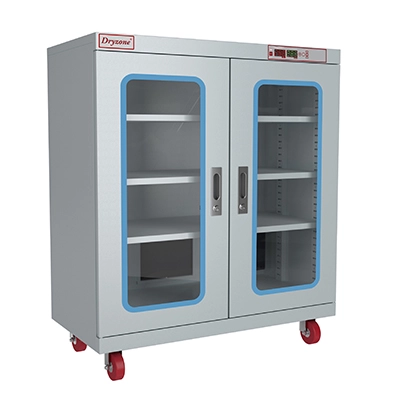
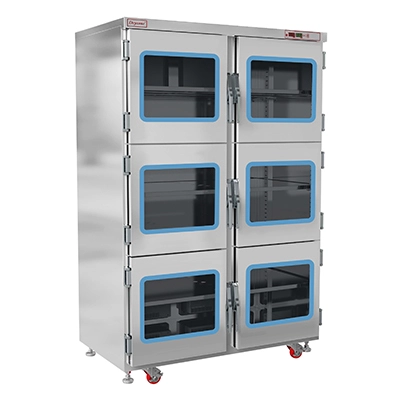
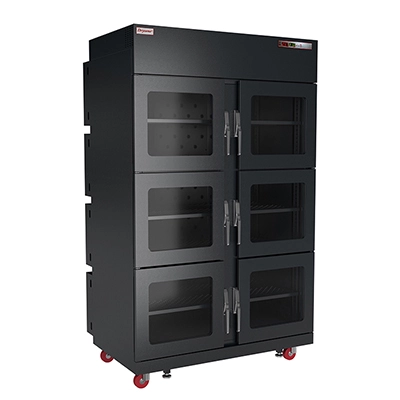
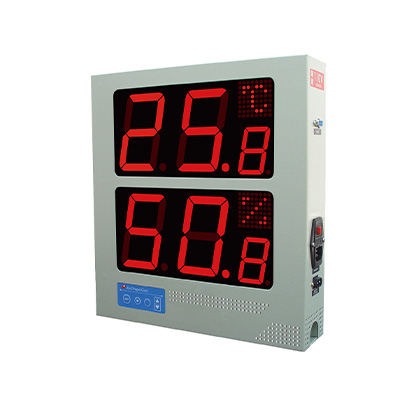
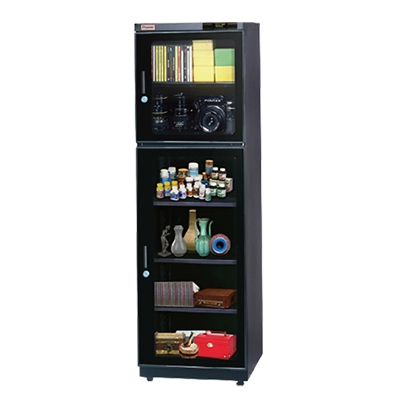
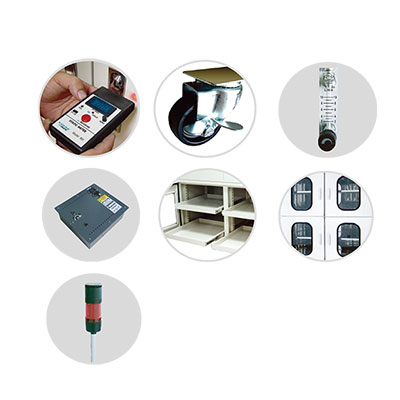
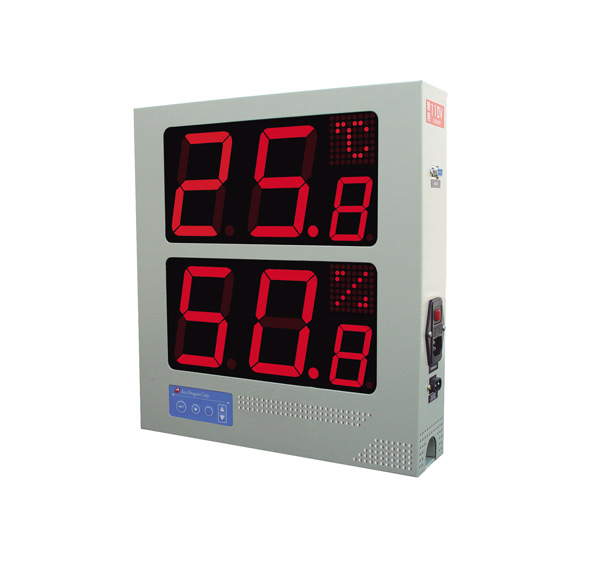
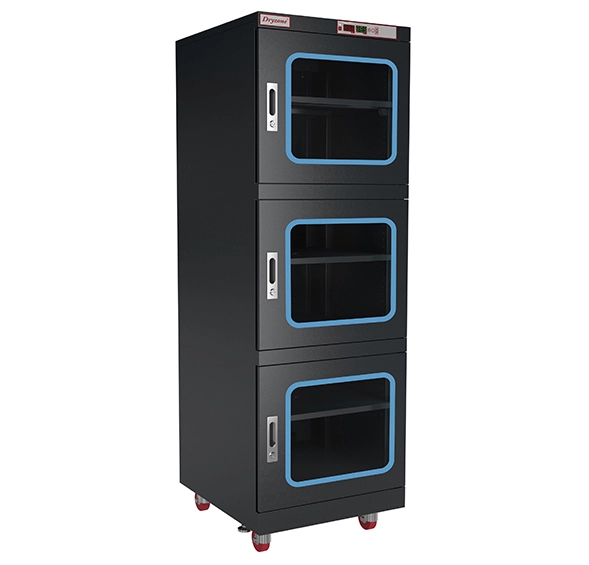

 To Know Dryzone More
For most SMT operations, a low-humidity dry cabinet is the more practical choice when the main objective is controlling moisture in opened reels, IC packages, PCBs, and other moisture-sensitive devices. A nitrogen cabinet becomes more appropriate when the stored material also requires reduced oxygen exposure, fast humidity recovery, or a controlled inert atmosphere.
The decision should therefore not be based simply on which cabinet can achieve the lowest RH. Semiconductor and electronics manufacturers need to consider the actual material risk, required humidity level, access frequency, process specification, and long-term operating cost.
Both systems create a controlled low-humidity environment, but they achieve it differently.
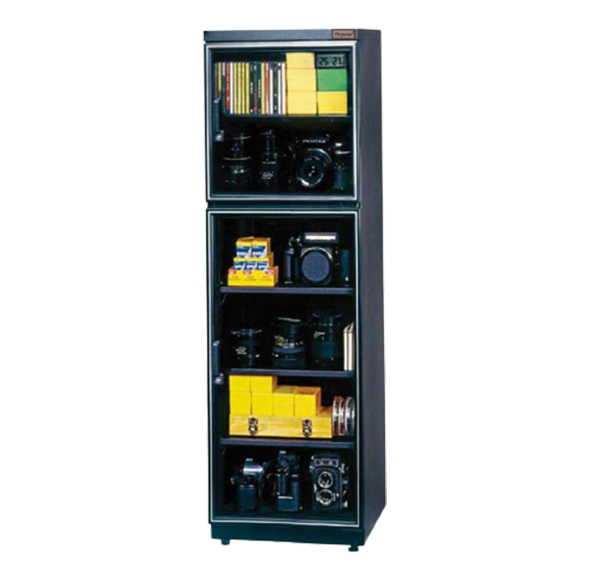
A dry cabinet typically removes moisture from the enclosed air through a dehumidification or desiccant regeneration system. Once the target humidity is reached, the cabinet automatically maintains that condition without requiring an external gas supply.
A nitrogen cabinet introduces dry N2 into the enclosure, displacing humid air while also reducing oxygen concentration. This gives nitrogen storage an additional advantage where oxidation control is important.
| Factor | Dry Cabinet | Nitrogen Cabinet |
| Primary function | Moisture control | Moisture and oxygen control |
| External gas required | No | Yes |
| Best suited for | MSDs, SMD reels, ICs, PCBs | Wafers, sensitive semiconductor materials, oxidation-sensitive parts |
| Operating cost | Generally lower | Depends on nitrogen consumption |
| Installation | Relatively simple | Requires N2 supply and flow control |
| Low-RH capability | Depends on cabinet design | Very low RH achievable with proper purge control |
The practical question is therefore whether the process requires low humidity only or low humidity plus reduced oxygen exposure.

For moisture-sensitive semiconductor packages, storage requirements should follow the component's moisture sensitivity level and the applicable IPC/JEDEC handling procedure.
Under IPC/JEDEC J-STD-033 guidance, devices stored in a dry atmosphere cabinet at no more than 5% RH can, under the specified conditions, be treated similarly to devices maintained in dry-pack storage. Cabinets also need to recover to their rated humidity after normal disturbances such as door opening.
This makes ≤5% RH a practical target for many opened MSD storage applications, particularly where reels or trays move repeatedly between storage and SMT production.
However, low humidity should not be treated as an automatic way to erase previous exposure history. Floor-life recovery depends on MSL, previous exposure time, humidity conditions, and the applicable drying procedure. Storage control and floor-life restoration should be managed as separate process decisions.
A nitrogen cabinet is most valuable when moisture is not the only storage risk.
In semiconductor manufacturing, wafers, substrates, lead frames, and other sensitive surfaces may require protection against oxidation in addition to humidity. Nitrogen purging provides an inert or oxygen-reduced environment that a conventional dehumidifying cabinet does not provide. Dryzone also identifies semiconductor wafer storage as a major application for nitrogen-controlled cabinets.
Nitrogen storage is particularly worth considering when:
the process specification explicitly requires N2;
oxidation or surface degradation could affect later bonding, plating, soldering, or packaging processes;
the cabinet is opened frequently and rapid RH recovery is important;
the facility already has a centralized nitrogen supply.
For these applications, nitrogen consumption should still be controlled rather than relying on continuous unrestricted purging. Dryzone's QDN control system, for example, regulates nitrogen according to the humidity setpoint and is designed to reduce N2 consumption by 40–60% compared with conventional nitrogen dry boxes.
For opened SMD reels, IC trays, components waiting for assembly, and other routine MSD storage, a high-performance dry cabinet often provides sufficient protection without the additional nitrogen infrastructure.
This is particularly useful around SMT production lines, where operators may repeatedly remove and return materials throughout a shift. Modern commercial drying cabinets can maintain ultra-low humidity while providing alarms, monitoring, ESD protection, and rapid recovery after door opening.
A good dry cabinet can therefore simplify MSD control while reducing dependence on baking. Excessive or unnecessary baking is not desirable because repeated thermal exposure can create its own solderability and material reliability concerns.
The key specification is not simply the advertised minimum RH. A cabinet that reaches 1% RH under an empty laboratory test but takes too long to recover after operators open the door may be less useful than a system with better recovery performance under actual production conditions.
Dry cabinets usually have the simpler cost structure because they mainly require electrical power and routine maintenance.
Nitrogen cabinets introduce additional operating factors:
Nitrogen supply → piping → pressure control → flow control → cabinet leakage → actual N2 consumption
If a semiconductor plant already operates a centralized nitrogen network, the additional cost may be relatively manageable. For a smaller SMT facility without an existing N2 supply, installing nitrogen solely for component storage may be difficult to justify when humidity control is the main requirement.
This is why total cost of ownership should be evaluated rather than purchase price alone.
A nitrogen cabinet that uses intelligent purge control can significantly reduce gas waste. Conversely, a dry cabinet with poor door sealing or slow humidity recovery can create production delays even if its initial price is lower.
Use the material risk and production process as the starting point.
| Storage Requirement | Recommended Direction |
| Opened SMT moisture-sensitive devices | Ultra-low humidity dry cabinet |
| SMD reels and IC trays near production lines | Dry cabinet |
| Semiconductor wafers requiring oxidation protection | Nitrogen cabinet |
| Materials requiring an inert atmosphere | Nitrogen cabinet |
| Humidity control without available N2 infrastructure | Dry cabinet |
| Frequent cabinet access | Choose based on verified RH recovery performance |
| Humidity plus oxidation control | Nitrogen cabinet |
Facilities do not necessarily need to choose only one technology. Semiconductor factories may use nitrogen cabinets for high-value or oxidation-sensitive materials while installing dry cabinets around SMT production areas for routine MSD management.
When reviewing a drying cabinet for sale, avoid comparing suppliers only by cabinet volume and minimum RH.
Ask how quickly the cabinet returns to its target humidity after the door has been opened. Check whether RH remains uniform throughout a fully loaded cabinet rather than only near the sensor. For electronics production, ESD protection, sensor accuracy, calibration options, alarms, data logging, door sealing, and shelf configuration can be just as important as the humidity specification itself.
Door design deserves particular attention. Several smaller compartments can reduce the amount of humid factory air entering the cabinet every time an operator retrieves one reel or tray.
The cabinet should ultimately support the production workflow instead of forcing operators to work around the storage system.
For most SMT moisture-sensitive component storage, an ultra-low humidity dry cabinet provides a practical balance of humidity control, operating cost, and installation simplicity.
A nitrogen cabinet should be selected when the process requires more than moisture protection—particularly where oxidation prevention, inert storage, wafer protection, or specialized semiconductor process requirements are involved.
The best solution is therefore not automatically the cabinet with the lowest RH specification. It is the system that can maintain the required storage condition reliably after real production door openings, with acceptable operating cost and sufficient process traceability.
Dryzone provides both low-humidity dry cabinets and nitrogen-controlled storage solutions for semiconductor and SMT applications, allowing the storage method to be matched to the actual material and process requirement rather than using a single approach for every component.
No. Nitrogen is more useful when oxidation or inert-atmosphere control is required. For moisture control alone, a dry cabinet is often more economical.
For many opened MSD applications, ≤5% RH is a common target under IPC/JEDEC storage practices.
Storage at sufficiently low RH can pause or extend floor-life under specified J-STD-033 conditions, but previous exposure history and MSL requirements must still be considered.
Yes. Nitrogen supply alone does not prove that the required storage condition is being maintained. RH should still be monitored and controlled.
Nitrogen cabinets are commonly preferred when wafers require both low humidity and additional protection against oxidation.