 EN
EN
 jp
jp  ko
ko  fr
fr  es
es  ru
ru  pt
pt  ar
ar  th
th  vi
vi  id
id 
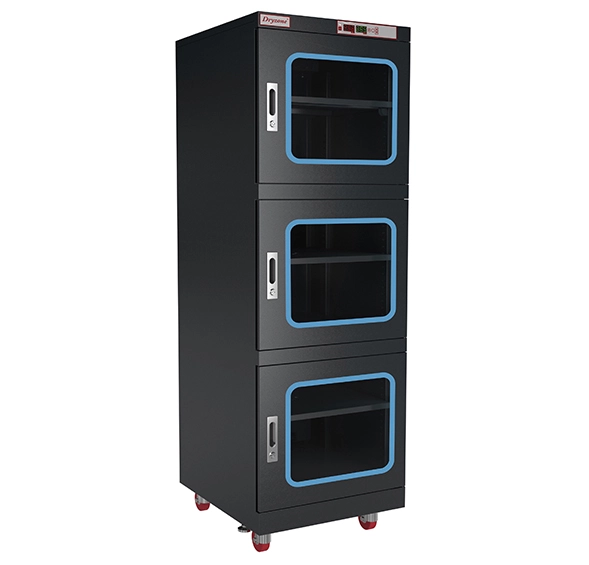

 To Know Dryzone More
What humidity should be maintained when storing different items? Learn more about it below!
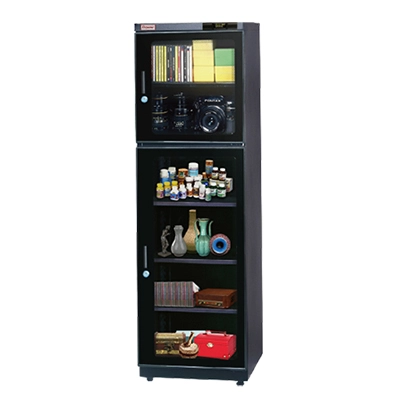
For digital cameras, monitoring cameras, wide-angle lenses, optical microscopes, and high-magnification lenses, the humidity level should be set at 40-50%RH during storage. Wide-angle lenses may develop mold due to cold and humidity. Cameras with wide-angle lenses, such as cameras, digital cameras, and camcorders, are particularly sensitive to environmental humidity. If the surface of a wide-angle lens is touched by water containing yellow mold, it will gradually corrode the inside of the lens, causing harm.
The International Camera Industry Association emphasizes that when the temperature is below 10℃, or the environmental humidity is below 60RH, yellow mold will stop growing. Yellow mold can grow and develop at an environmental humidity of 60RH, and it will produce flammable growth between 70RH and 90RH! Therefore, the lower limit of environmental humidity for storing cameras should not be less than 40RH, and the upper limit should not exceed 60RH. The optimal range is 40RH to 50RH! The environmental humidity for storing floppy disks, tapes, PPTs, photos, film cameras, magnetic tapes, electronic optical film, digital cameras, and digital camcorders in dry cabinets should be set at 40-50%RH.
For users concerned about long-term camera humidity level control, maintaining stable humidity is usually more important than pursuing extremely low RH values. A stable dry cabinet setting for camera storage can help reduce the risk of mold while protecting lens coatings and internal lubricants.
The environmental humidity for storing floppy disks, tapes, PPTs, photos, film cameras, magnetic tapes, electronic optical film, digital cameras, and digital camcorders in dry cabinets should also be set at 40-50%RH. Many photographers today use an optical lens storage cabinet with automatic humidity adjustment to maintain a stable storage environment throughout the year.
For users monitoring dry box camera humidity, regular inspection of the cabinet seal and humidity sensor is also recommended to ensure accurate RH readings.
Here is a brief mention of the humidity dry cabinet for film, although the market share of film cameras has been far surpassed by digital cameras in recent years. Considering the retro trend of film in recent years, more people are using film cameras than before. Film can be stored for nearly 70 years at a relative humidity of 10rh. This number drops to 20 years at a relative humidity of 70rh, highlighting the importance of lower humidity levels for better storage results.
In addition to humidity, temperature is also a significant factor in determining the storage time of film. Here, it is recommended that both humidity and temperature be as low as possible.
Scientifically speaking, the sound of a piano is relatively suitable when the humidity is between 25-35%RH. Generally, it is not necessary to be too scrupulous. Humidity is probably like people. If people are comfortable, so is the piano. If we want to be more precise, South and North China and summer and winter have different humidity requirements. The humidity storage cabinet for storing instruments should be set at around 25rh-35rh.
For wooden instruments, excessive humidity may cause swelling or deformation, while overly dry conditions may increase the risk of cracking. Therefore, maintaining a stable humidity environment is usually more important than simply lowering humidity as much as possible.
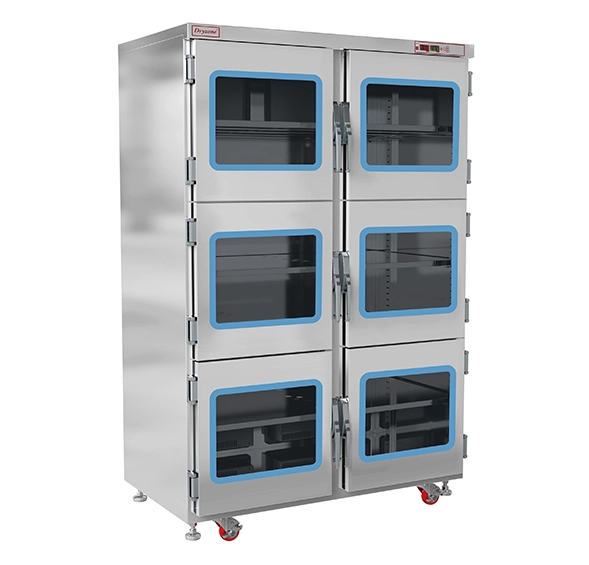
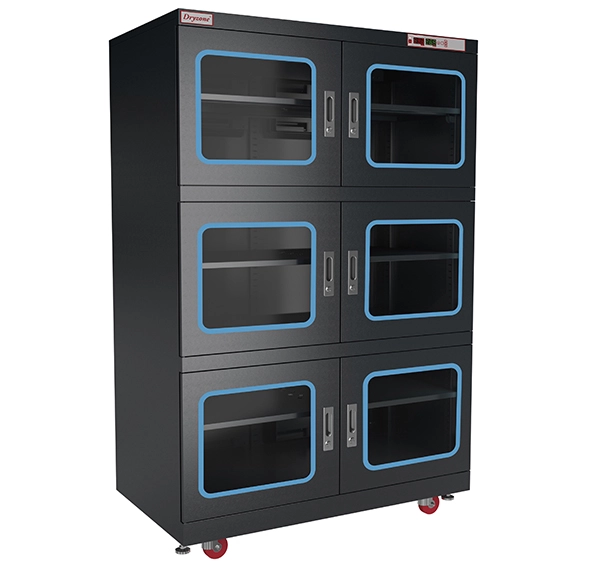
Electronic components are much more sensitive to moisture than cameras or musical instruments. Semiconductor devices, PCB boards, SMT reels, and IC packages can absorb moisture from the surrounding air during storage. According to IPC moisture-sensitive device (MSD) handling guidelines widely used in the electronics manufacturing industry, excessive humidity exposure may increase the risk of internal damage during reflow soldering.
For many electronic components, recommended storage humidity is below 10% RH. Some moisture-sensitive devices are stored at 1–5% RH to minimize moisture absorption before assembly. This is one reason why industrial manufacturers often use ultra-low humidity dry cabinets or nitrogen cabinets for semiconductor and PCB storage. For users wondering how to lower humidity in dry box systems for electronics storage, cabinet airtightness, door opening frequency, ambient humidity, and dehumidification performance all affect the final RH level.
Incorrect humidity settings can damage sensitive items over time.
Excessive humidity may cause:
Lens fungus and mold growth
Oxidation on metal surfaces
PCB corrosion
Film deterioration
Condensation damage
Reduced lifespan of electronic components
This is especially common in tropical or coastal environments where ambient humidity regularly exceeds 70% RH.
Humidity that is too low may also create problems in some applications:
Rubber seals may dry out
Wooden instruments may crack
Static electricity risk may increase
Certain materials may become brittle over time
Because different products require different humidity conditions, there is no universal RH setting suitable for all storage applications. The best approach is to choose a humidity range based on the material being stored and maintain stable environmental control over the long term.
· The Working Principle And Application Of Nitrogen Cabinet
· Dry Storage Cabinets for Electronics Components
· How Does a Dry Cabinet Work?
· Common Dry Cabinet Malfunctions and Solutions
· Operating Guide for Dry Camera Cabinet: Usage Steps and Precautions
· The Importance of a Dehumidifier Cabinet for Camera in Humid Environments