 EN
EN
 jp
jp  ko
ko  fr
fr  es
es  ru
ru  pt
pt  ar
ar  th
th  vi
vi  id
id 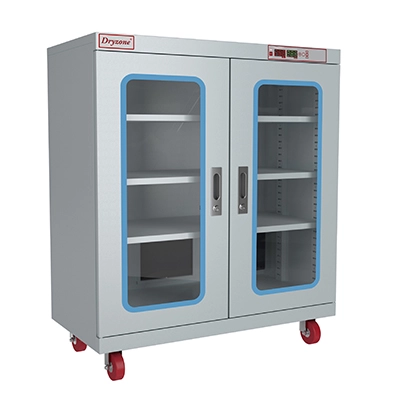
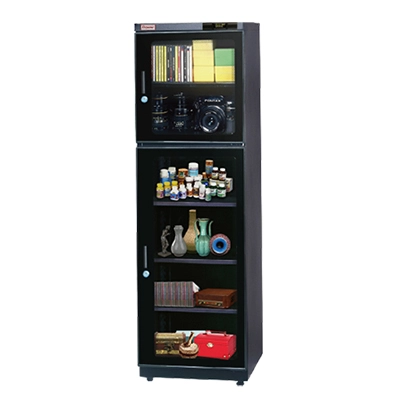
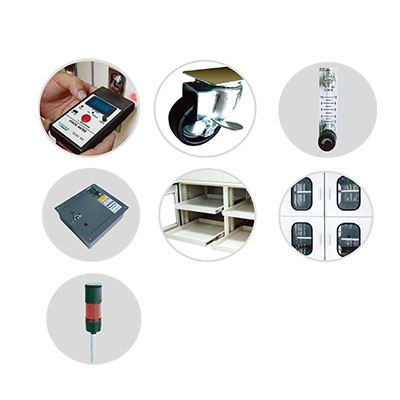
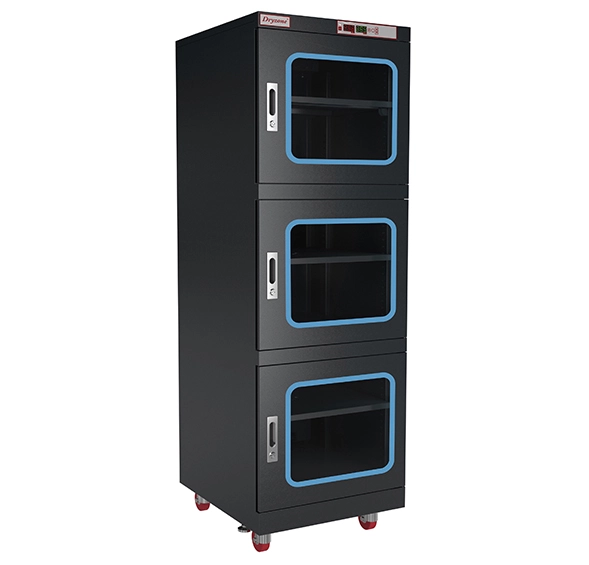
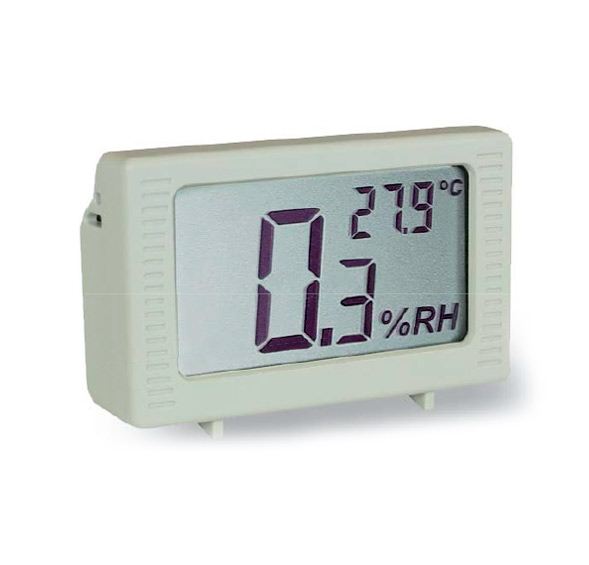
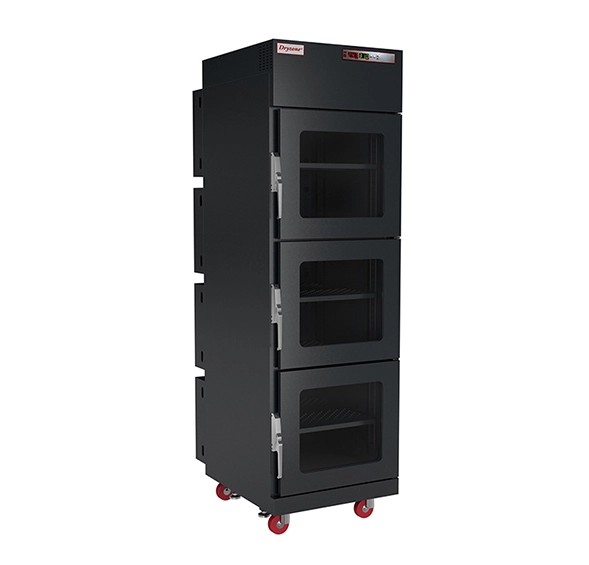

 To Know Dryzone More
In modern surface-mount technology (SMT) production, moisture-sensitive devices (MSDs) such as semiconductors, MEMS sensors, and optical modules are highly vulnerable to environmental moisture. Exceeding the IPC/JEDEC J-STD-033 "floor life" can cause catastrophic failure during reflow soldering, known as the “popcorn effect,” which may result in internal cracks, delamination, or even device rupture.
Traditional high-temperature baking ovens (125℃) can remove absorbed moisture, but they bring two critical challenges:
Thermal Damage Risk: Excessive heat can accelerate oxidation of metal leads or damage sensitive packaging materials.
Post-Bake Moisture Reabsorption: Once components cool to ambient temperature, they may absorb moisture again, reducing the effectiveness of baking.
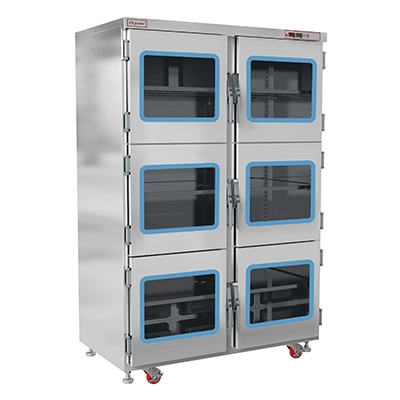
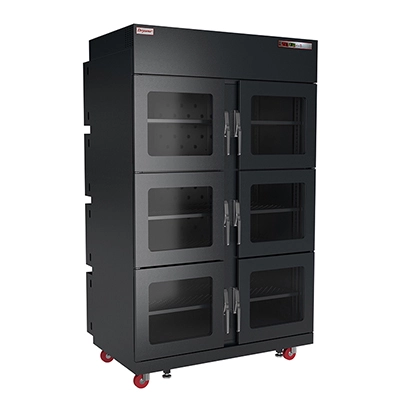
The Dryzone Baking Humidity Control Cabinet addresses these issues by combining low-temperature baking (40–60℃) with ultra-low humidity storage (<1% RH), ensuring safe restoration of MSD floor life without compromising component integrity.
A baking humidity control cabinet integrates both baking and ultra-low humidity storage. Unlike traditional ovens:
| Feature | Traditional Oven | Baking Humidity Control Cabinet | Why It Matters |
|---|---|---|---|
| Temperature Control | Fixed 125℃ | Adjustable 40–60℃ | Low-temperature prevents oxidation and carrier deformation |
| Humidity Control | None | <1% RH | Eliminates post-bake moisture reabsorption |
| Storage Capability | None | Continuous storage | Components cool in dry environment, no re-exposure to moisture |
| Multi-Purpose | Single baking | Baking + ultra-low humidity storage | Saves floor space and labor |
| Compliance | Limited | J-STD-033 compatible | Suitable for MSL 4/5/5a components |
Components are gently heated to 40–60℃ to release moisture molecules from within. Simultaneously, the cabinet’s dehumidification system removes water vapor immediately, keeping humidity below 1% RH throughout baking and cooling. This ensures complete moisture removal and prevents reabsorption, a common limitation of traditional ovens.
High temperatures can deform low-temperature carriers (tape or trays) and accelerate oxidation of metal leads, solder balls, and bond pads. Sensitive MSL 4/5/5a components often cannot withstand repeated high-temperature cycles.
After baking, removing components to ambient air exposes them to moisture, negating the baking process. This “re-moisturization” can lead to reduced yield or rework.
The Dryzone baking dry cabinet maintains <1% RH while gently heating components. Moisture molecules released during baking are immediately extracted by the internal dehumidification system. This ensures components remain dry throughout the process.
40℃ constant mode: Compatible with low-temperature carriers, allowing direct in-cabinet recovery without transferring devices, reducing labor and risk of carrier damage.
40–60℃ adjustable mode: Flexibly set according to component temperature tolerance, achieving optimal moisture removal while ensuring safety.
Components remain in the same ultra-low humidity environment during cooling. With RH consistently below 1%, re-moisturization is eliminated, guaranteeing full restoration of floor life.
According to J-STD-033, MSL 4/5/5a devices exposed for less than 8 hours can be safely baked in a low-temperature dry cabinet. Dryzone provides a compliant, efficient solution to bring overexposed components back to production readiness, reducing waste.
| Parameter | Value |
|---|---|
| Temperature Range | 40–60℃ adjustable |
| Humidity | <1% RH |
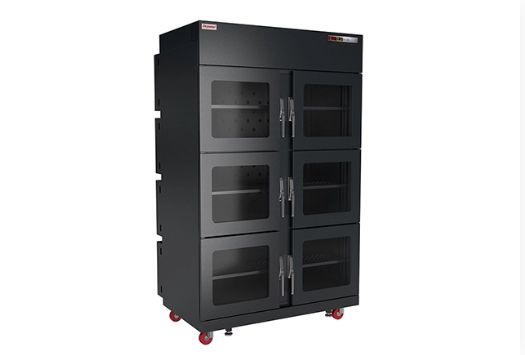
| External Dimensions | W1200 × D780 × H1966 mm |
| Internal Dimensions | W1086 × D587 × H1496 mm |
| Capacity | 954 L |
| Shelves | 5 layers SUS stainless steel |
| Average Power | 1000 W/h |
| Peak Power | 2110 W/h |
| Color | Black |
| ESD Protection | 10⁶~10⁹ Ω |
| Parameter | Value |
|---|---|
| Temperature Range | 40–60℃ adjustable |
| Humidity | <1% RH |
| External Dimensions | W600 × D780 × H1966 mm |
| Internal Dimensions | W486 × D587 × H1496 mm |
| Capacity | 426 L |
| Shelves | 3 layers SUS stainless steel |
| Average Power | 600 W/h |
| Peak Power | 1145 W/h |
| Color | Black |
| ESD Protection | 10⁶~10⁹ Ω |
SMT production lines: Quick recovery of overexposed MSDs
Semiconductor assembly: Low-temperature baking of wafers, BGAs, and PCBs
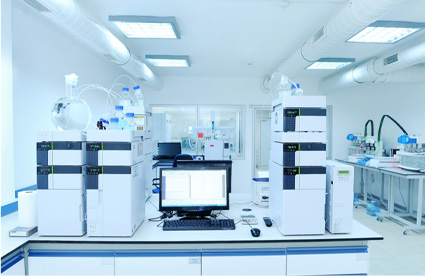
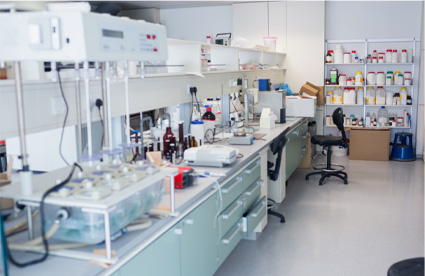
R&D labs: Long-term preservation of moisture-sensitive optical modules, MEMS, and sensors
Aerospace & defense electronics: High-reliability component preconditioning
| Feature | Traditional 125℃ Oven | Dryzone Baking Humidity Control Cabinet |
|---|---|---|
| Baking Temperature | 125℃ fixed | 40–60℃ adjustable |
| Humidity Control | None | <1% RH |
| Low-Temperature Carrier Compatibility | Not compatible | Compatible (≤40℃) |
| Post-Bake Moisture Reabsorption | Exists | Eliminated |
| Oxidation Risk | High | Low |
| Labor Requirement | Manual transfer | Direct in-cabinet baking |
| Functionality | Single baking | Baking + storage |
Q1: Which components are suitable for a baking humidity control cabinet?
A: MSL 4/5/5a SMD devices, BGAs, PCBs, wafers, optical devices, especially in low-temperature carriers (tape/tray).
Q2: How long does 40℃ baking take?
A: Depends on component type and moisture level. J-STD-033 recommends 192 hours (8 days) as a safe guideline.
Q3: Can components be used immediately after baking?
A: Yes. Components cool inside the cabinet at <1% RH, preventing re-moisturization and ready for SMT placement.
Q4: Is power consumption high?
A: E60A-600 averages 600 W/h, E60A-1200-6 averages 1000 W/h. Energy consumption is lower than 125℃ ovens and includes storage capability, reducing operational costs.
Q5: Does the cabinet require nitrogen?
A: No. Dryzone baking humidity control cabinets use electronic dehumidification to maintain <1% RH without nitrogen.